Advice
Can Grit Work On Snow?
Yes, but not instantly, and not on deep snow. Here’s what to expect.
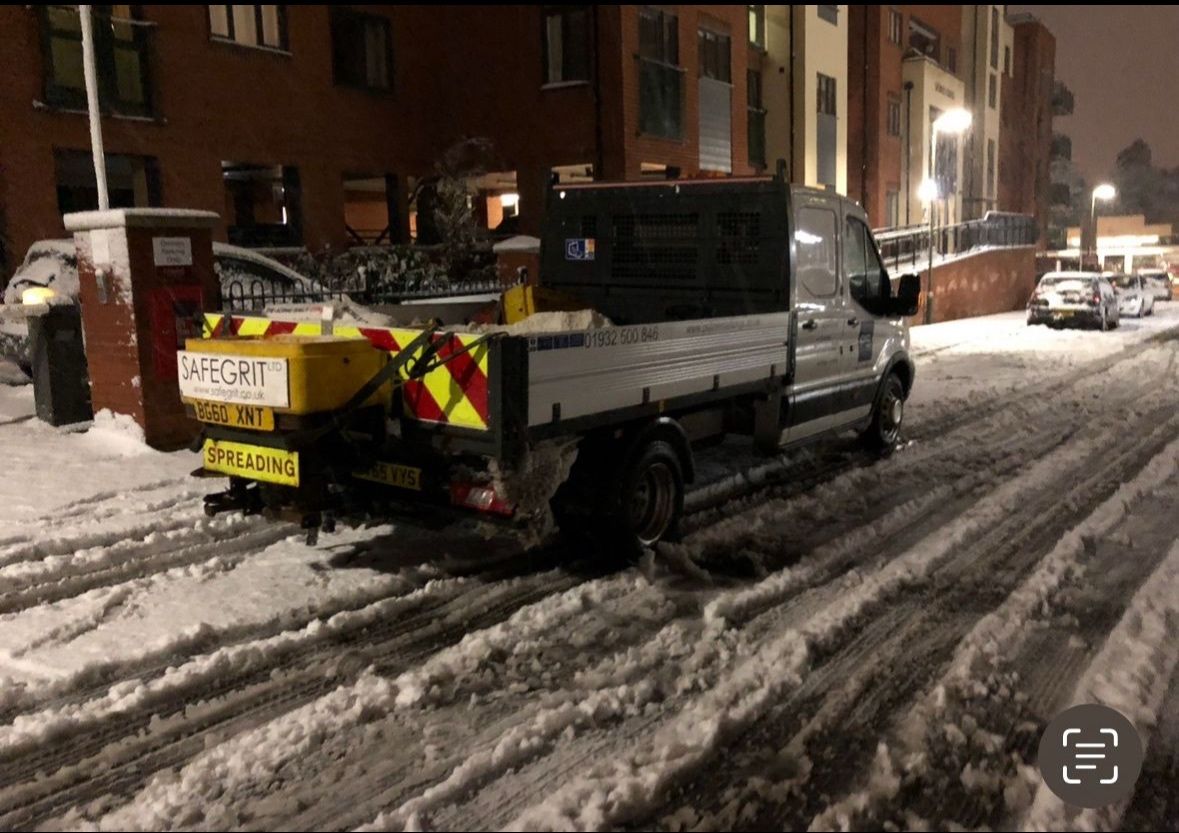
When snow is forecast, a common question is whether gritting is enough to keep a site clear. The short answer is that grit does work on snow, but only in the right conditions. Knowing the limits helps you plan properly, and avoid the frustration of a car park that’s still white after treatment.
The Short Answer
Grit can work on snow. It works best on light snow, it isn’t instant, and it needs movement to do its job. Once snow gets deeper, the surface needs to be cleared first.
How Grit Works On Snow
Grit is rock salt, and the principle is the same as with ice. Salt mixes with moisture to form a brine, a salty solution that freezes at a lower temperature than plain water. As the brine forms, it melts the snow around each grain of salt and works its way down through the snow towards the surface.
The key word is movement. Salt needs to be ground down and spread into the snow particles to create the brine. That’s why the footsteps and vehicles passing over a treated area make such a difference. Without that movement, the salt can sit on top of the snow and do very little.
Why It Isn't Instant
Gritting doesn’t turn a snowy surface “back to black” the moment the salt lands. The process takes time:
- The salt starts melting the snow around each grain.
- Brine forms and spreads as people and vehicles move across the surface.
- The snow turns to slush, which then clears more easily.
If you can still see snow shortly after treatment, it doesn’t mean the gritting hasn’t worked. It may just not have had time or traffic to finish the job.
The Depth Limit: Around 40mm
Grit has a limit. As a rule of thumb, salt copes with snow up to around 40mm deep, which is a little under two inches. Above that, there’s too much snow for the salt to get through, and the brine can’t reach the surface.
For deeper snow, the answer is to clear it first, using ploughs for large areas and smaller equipment for footpaths, and then treat the surface with salt.
Why Clearing First Matters
There’s a second reason to clear snow before treating, and it’s about what might be underneath.
- There may be ice under the snow. If the surface froze before the snow arrived, ice can be hiding beneath it.
- Snow acts as a barrier. A thick layer stops the grit reaching the ice, so the salt can’t interact with it and can’t do its job.
- Footfall can make it worse. Walking on snow compacts it into slippery sheets that are much harder to shift.
Clearing the snow exposes the surface, so salt can reach any ice underneath and start forming brine straight away.
Timing Matters
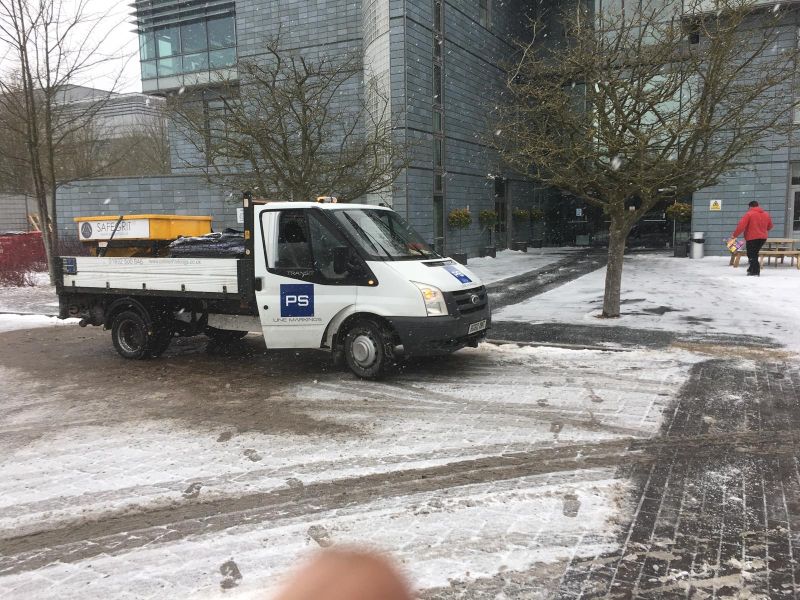
The best results come from treating before or as the snow falls. When salt is already on the surface, the flakes land on it and begin melting from below. That helps stop snow bonding to the ground and makes anything that does settle easier to clear.
That’s why we monitor forecasts and treat sites ahead of the weather, rather than waiting until the snow has settled.
Quick Guide
- Light snow, or a dusting: treat with grit, ideally before or as it falls, and let traffic work the salt in.
- Up to around 40mm: grit can work, but allow time and movement, and expect slush before a clear surface.
- Deeper snow: clear it first, then treat the surface.
- Ice suspected underneath: clear the snow so the salt can reach it.
How SafeGrit Helps
Gritting and snow clearance work best together, which is why we offer both.
- Gritting. We treat your site before the weather arrives, so frost and snow struggle to bond to the surface.
- Snow clearance. Our own mechanical ploughs clear roads and large areas, and our smaller equipment handles footpaths and tight spaces, followed by salt where it’s needed.
- Confirmation. Our crews log every visit on our app with before and after photos, and you receive a confirmation email afterwards.
Every contract starts with a free site inspection and a plan that shows exactly what we’ll treat and when.